NDIS Huntington’s Disease Support

NDIS Huntington’s Disease Support

Specialist Clinical-Led Care for Progressive Neurological Conditions

Huntington’s disease is a complex, progressive neurological condition that affects movement, cognition, behaviour, and mental health. As the condition advances, support needs typically increase in both intensity and complexity, often placing significant emotional and practical pressure on participants and their families.

Innovative Australian Care (IAC) provides specialist NDIS Huntington’s disease support designed specifically for individuals with progressive neurological conditions and high-acuity needs. Our care model combines clinical governance, evidence-informed practice, and structured outcome tracking to deliver safe, consistent, and adaptable support across all stages of Huntington’s disease.

We support NDIS participants through in-home care, Supported Independent Living (SIL), Specialist Disability Accommodation (SDA), community access, behavioural support, and hospital or crisis transitions, with active service delivery across Greater Sydney, Newcastle, and the Central Coast.

Understanding Huntington’s Disease and Disability Support Needs

Huntington’s disease is a hereditary, neurodegenerative condition that typically involves:

Because Huntington’s disease progresses over time, support requirements are rarely static. Participants may move from low-intensity assistance to high-level, 24/7 support with clinical oversight as their condition evolves.

Effective disability support for Huntington’s disease must therefore be anticipatory, adaptable, and clinically informed, rather than reactive or task-focused.

Why Specialist NDIS Huntington’s Disease Support Is Critical

Many standard disability support models are not equipped to manage the complexity of Huntington’s disease. Without specialist oversight, participants may experience:

  • Inconsistent care due to limited staff training
  • Increased behavioural incidents or emotional distress
  • Fragmented coordination between disability, health, and mental health systems
  • Higher rates of hospitalisation during periods of instability
  • Significant carer and family burnout

IAC addresses these risks through a clinical-led, systems-based model that prioritises safety, continuity, and measurable outcomes.

The IAC Clinical-Led Care Model

Innovative Australian Care is led by PhD-qualified care and quality management specialists, supported by an in-house multidisciplinary team that includes Registered Nurses, Enrolled Nurses, doctors, and behaviour specialists.

Our Huntington’s disease supports are underpinned by:

Embedded clinical governance across all services

Structured risk management and escalation pathways

Evidence-informed care planning and review

Continuous improvement using Lean Six Sigma methodology

This approach allows us to deliver high-acuity, outcome-focused care while reducing risk and improving long-term stability.

Specialist In-Home Support

NDIS Services for Huntington’s Disease

For participants living in their own homes, IAC provides structured in-home support that adapts as needs change. Supports may include:

All in-home services operate under clinical oversight to ensure safety and continuity as the condition progresses.

Frequently Asked Questions – NDIS Huntington’s Disease Support

Yes. Huntington’s disease is recognised under the NDIS as a permanent and progressive neurological condition. Eligible participants may access funded supports related to daily living, mobility, behaviour support, housing, and capacity building, depending on individual needs and functional impact.

NDIS supports may include in-home care, community access, behaviour support, Supported Independent Living (SIL), Specialist Disability Accommodation (SDA), assistive technology, and coordination supports. Funding is tailored to the participant’s stage of disease and functional requirements.

Yes. Huntington’s disease is progressive, and NDIS plans can be reviewed as needs change. IAC assists with documentation and reporting to support plan reviews and funding adjustments over time.

IAC provides integrated behaviour support aligned with clinical oversight. We develop positive behaviour support plans, work collaboratively with allied health professionals, and prioritise trauma-informed, person-centred approaches.

IAC provides integrated behaviour support aligned with clinical oversight. We develop positive behaviour support plans, work collaboratively with allied health professionals, and prioritise trauma-informed, person-centred approaches.

Yes. All IAC services operate under clinical governance, with oversight from Registered Nurses and senior clinical staff. This ensures safe medication management, risk monitoring, and escalation when required.

Yes. IAC specialises in hospital discharge and crisis transitions, coordinating care, support, medication, equipment, and accommodation to reduce readmission risk and promote stability.

IAC provides SIL services directly and supports participants to access suitable SDA where appropriate. We focus on matching participants to environments that support safety, function, and quality of life.

Families are actively involved in planning, communication, and review processes, subject to participant consent. We provide regular updates and collaborate to ensure continuity and transparency.

IAC currently delivers services across Greater Sydney, Newcastle, and the Central Coast. Additional areas may be supported through coordinated arrangements.

You can contact IAC directly to discuss needs, eligibility, and care options. We offer structured intake, clinical assessment, and collaborative planning with participants, families, and Support Coordinators.

Supported Independent Living (SIL)

For participants requiring higher levels of daily support, IAC delivers SIL services designed for complex neurological and behavioural needs. Our SIL model focuses on:

  • 24/7 staffing with trained, supervised support workers
  • Consistent routines and structured environments
  • Clinical oversight for health changes and medication
  • Behaviour support aligned with individual needs
  • Preserving dignity, autonomy, and choice

Our housing matches prioritise clinical and cultural suitability, reducing the risk of placement breakdowns.


Specialist Disability Accommodation (SDA)

Where SDA is appropriate, IAC supports participants to access accommodation that meets their functional and safety needs. We assist with:

  • Understanding SDA eligibility and evidence requirements
  • Matching participants to appropriate SDA properties
  • Coordinating support within SDA environments
  • Ongoing monitoring to ensure accommodation remains suitable


Behaviour Support and Mental Health Integration

Behavioural and psychological changes are common in Huntington’s disease and often intensify over time. IAC provides integrated behaviour support that:

  • Develops positive behaviour support plans
  • Reduces restrictive practices where possible
  • Supports emotional regulation and mental well-being
  • Coordinates disability and mental health care

Our trauma-informed approach recognises the emotional impact of progressive neurological decline.


Hospital, Crisis, and Transition Support

IAC specialises in managing complex transitions, supporting participants to move safely between hospital, home, SIL, SDA, or crisis accommodation. Our transition support includes:

  • Hospital discharge planning with clinical oversight
  • Medication and equipment coordination
  • Transport and support continuity
  • Risk mitigation to reduce readmissions

Outcome-Driven Support You Can Measure

At IAC, support quality is measured, not assumed. We track participant outcomes using structured, evidence-based tools, particularly for complex neurological and mental health presentations.

This approach supports:

  • Reduced hospital admissions
  • Improved emotional stability
  • Decreased behavioural incidents
  • Greater consistency in care delivery

Families, Support Coordinators, and participants benefit from clear reporting and transparency.


Supporting Families and Carers

Huntington’s disease affects entire families. IAC works collaboratively with families and informal carers to provide:

  • Clear communication and shared planning
  • Education around disease progression
  • Regular updates and outcome reporting
  • Support during transitions and crises

We view families as essential partners in long-term care.


NDIS Funding and Coordination Support

IAC works closely with Support Coordinators and Plan Managers to align Huntington’s disease supports with appropriate NDIS funding categories, including:

  • Core Supports
  • Capacity Building Supports
  • SIL and SDA funding
  • Behaviour Support and Improved Daily Living

We assist with reporting and evidence to support plan reviews as needs change.

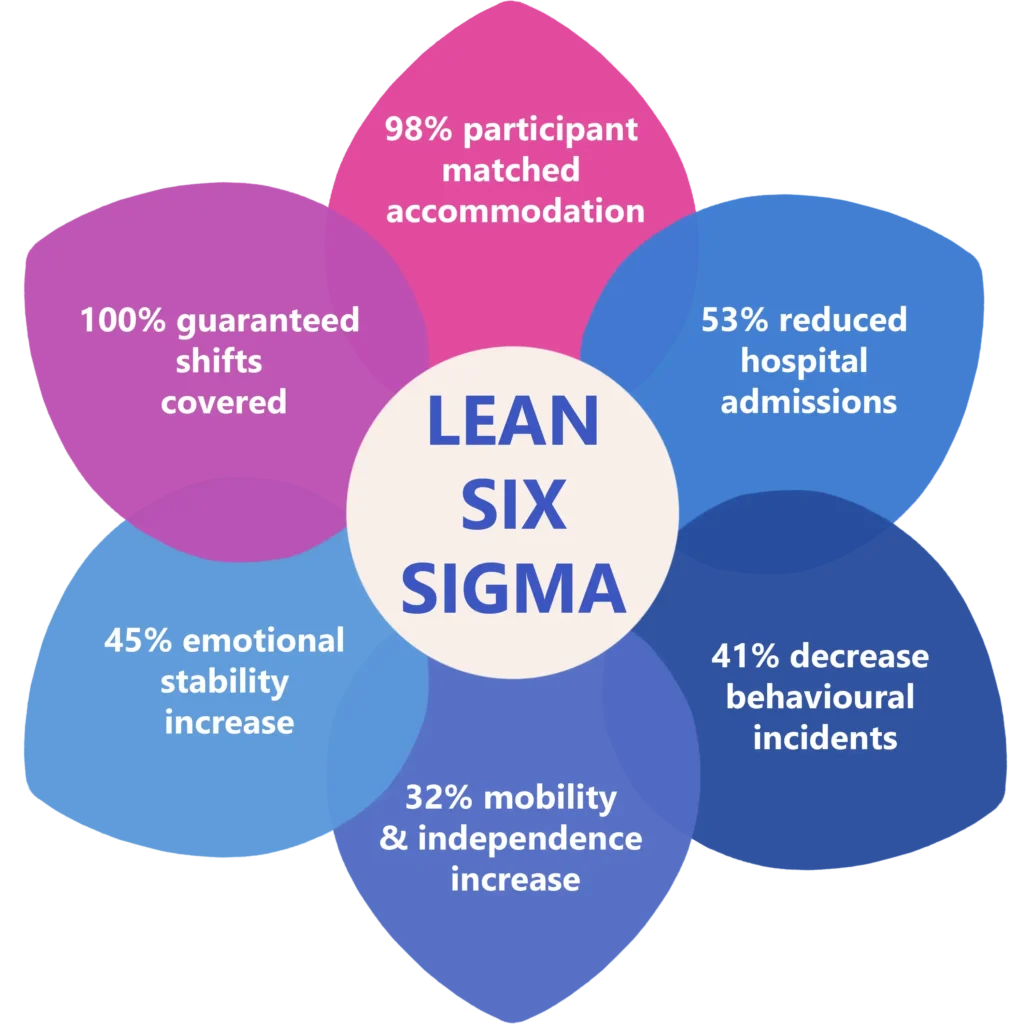
Proven Outcomes with Lean Six Sigma

We don’t just care, we measure impact.

Lean Six Sigma Petals

Why Choose IAC?

24/7 Doctor and RN Clinical Leadership

High-Acuity Discharge Specialists

Lean Six Sigma Service Model

Infection Control and Risk Assessment Built In

Real, Measurable Results

Trusted by Hospitals and Coordinators Across NSW

Trauma-Informed, Collaborative Approach

We’re part of your team – from referral to outcomes

Our team works alongside yours. We share plans, updates, and outcomes with support coordinators, families, and clinicians, building a care model that is transparent, integrated, and participant-first.

  • Ongoing collaboration across NDIS, DVA, DCJ, and SSRC systems
  • Real-time communication with support teams and families
  • Structured feedback and reporting for continuous improvement

Seamless Transitions from Hospital, Justice & Crisis Settings

From discharge to stable living – we manage the full pathway

We specialise in transitions from hospital wards, correctional settings and unstable housing into SIL, SDA, or stabilized in-home care, reducing risk, preventing relapse, and supporting long-term recovery.

  • Hospital discharge coordination with clinical oversight
  • Post-release support for justice-involved individuals
  • Medication, transport, equipment, and behavioural planning
  • Specialist staff training in trauma-informed care, mental health, forensic recovery, and clinical risk protocols

Measurable, Outcome-Driven Support Model

Support you can track – outcomes you can trust

Our services go beyond delivery, we monitor and report participant progress using evidence-based tools, especially for those with complex clinical and mental health needs. This approach empowers professionals, families, and participants with clear, measurable improvements in wellbeing, functionality, and independence.

  • 98% match rate for clinically and culturally suitable housing
  • 45% increase in emotional stability in participants with complex clinical and mental health conditions
  • 100% emergency response and shift coverage across SIL, SDA, and in-home care

Doctor-and Quality Specialist-Led Organisation

Conical leadership driving safety and outcomes

IAC is led by a PhD-qualified Clinical Care Manager and a Managing Director with a Master’s in Quality Management. We bring clinic governance and precision to every aspect of care across NDIS, DVA, and DCJ-funded services, including SIL, SDA, and complex in-home support.

  • In-house team: Doctors, RNs, ENs, and Behaviour Specialist
  • High-acuity care designed for participants with complex clinical and behabioural needs
  • Oversight that ensures best-practice service delivery in all supported settings
Rehanna Torrevillas

Rehanna Torrevillas

Quality & Compliance Manager

Rehanna Torrevillas is a Registered Nurse (RN) with years of experience across healthcare, disability, and community services. As Quality & Compliance Manager at Innovative Australian Care, she ensures the delivery of safe, ethical, and person-centred support.

She plays a key role in audits, outcome tracking, and continuous improvement — applying Lean Six Sigma principles to strengthen systems and reduce risks. With a calm, structured approach and a lifelong love of horses, Rehanna brings genuine care and clarity to every part of her work.

Mike Salama Profile

Mike Salama

Operations Manager

Mike Salama, Operations Manager at Innovative Australian Care, has over 10 years of experience working across the healthcare and NGO sectors. He leads the coordination of day-to-day operations across SIL, SDA, in-home care, and community programs, ensuring smooth service delivery and compliance with NDIS standards.

Mike is passionate about building responsive systems that support person-centred care. Outside of work, he enjoys spending time with his two sons and their energetic dog.

Kaylene Smith

Kaylene Smith

People & Culture Lead

Kaylene Smith, People & Culture Lead at Innovative Australian Care, is a highly experienced community nurse with over 17 years working across in-home care, disability services, and workforce development. Drawing from his clinical background, Kaylene brings a deep understanding of frontline care and uses that insight to shape IAC’s people-first culture.

She oversees recruitment, onboarding, training, and staff wellbeing across SIL, SDA, and community programs, ensuring every team member is equipped to deliver safe, inclusive, and participant-focused support.

Aya Mousa

Aya Mousa

Director

Aya Mousa is Director at IAC and a Quality Management Specialist with a Master’s in Quality Management and over a decade of experience leading service improvement across the disability and community care sectors. She oversees the organisation’s operational strategy, driving quality, compliance, workforce capability, and service excellence across SIL, SDA, and community-based supports.

With leadership experience in both NDIS and DCJ programs, Aya is passionate about embedding inclusive, person-centred practices across all levels of care. Drawing on both her professional background and lived experience supporting people with disabilities, she is dedicated to fostering environments that improve quality of life for individuals and families, particularly those with complex or high needs.

Outside of work, Aya enjoys swimming, a space where she finds energy, focus, and inspiration to lead with clarity and purpose.


Aya Mousa, Co-Founder and Director of Innovative Australian Care, holds a Master’s in Quality Management and brings over 10 years of experience in disability service leadership, DCJ programs, and high-level staff training. With a strong focus on NDIS participants, she oversees team development, operational strategy, and service delivery across SIL, SDA accommodation, and community services.

Driven by her lived experience supporting people with disabilities, Aya is passionate about inclusion, empowerment, and building care environments that improve quality of life for individuals and families across complex and high-needs settings.

In her downtime, Aya enjoys swimming — a space where she finds energy, focus, and inspiration to lead with clarity and purpose.

Ahmad Al-Najjar

Dr. Ahmad Al-Najjar

Accommodation Manager

Experienced healthcare and disability services professional with over 13 years of combined international and Australian experience, including 5 years working in the NDIS sector. Holds a PhD in Business (Lean Six Sigma in healthcare), a Master’s in Quality Management, and a Bachelor’s degree in Nursing. Proven ability to lead complex transitions from hospitals, justice settings, or crisis environments into appropriate SIL and SDA placements, while maintaining a strong focus on clinical safety, housing suitability, and participant outcomes. Experienced in working closely with Support Coordinators, families, and multidisciplinary teams to ensure smooth, person-centred transitions. 

Dr. Ahmad Al-Najjar is the Clinical Care Manager at IAC. He is a Registered Nurse with over 13 years of national and international experience in critical care, disability services, support coordination, and clinical leadership.

He holds a Master’s in Quality Management, a Graduate Certificate in Innovation, and a PhD in Healthcare and Innovation from Swinburne University. His PhD focused on using Lean Six Sigma to improve healthcare outcomes and reduce risks.

At IAC, Ahmad leads the clinical strategy for Supported Independent Living (SIL) and Specialist Disability Accommodation (SDA). His key focus areas include:

  • Reducing hospital readmissions
  • Improving participant stability
  • Making sure accommodation suits participants’ needs

Ahmad has played an important role in helping participants with complex needs achieve their goals. He also leads ongoing staff training to ensure safe, high-quality care.

He combines hands-on clinical experience with a strong focus on systems and quality. Outside of work, Ahmad enjoys cycling to stay focused, balanced, and energised.